
OKX UAE, part of the global crypto exchange OKX and regulated in Dubai by the Virtual Assets Regulatory Authority (VARA), opened access on 12 October 2026 to more than 80 tokenised US stocks. Trading runs around the clock, weekends included, with fractional positions, automatic dividend economics and zero-fee AED deposits. For the UAE market, this is the first global crypto platform where a dirham fiat rail sits side by side with the crypto wallet.
The launch was announced by OKX UAE and covered by Fintech News UAE. Tokenised stocks — a form of real-world assets (RWA) on-chain — are on-chain instruments offering one-to-one price exposure to the underlying share: a user gets the price move in Apple, NVIDIA or Tesla while trading and holding the position inside the digital-asset environment. For OKX UAE the step marks an expansion beyond crypto toward a single app in which bitcoin and ether sit next to fractional exposure in the S&P 500 or Nasdaq-100.
What exactly has launched
At launch, UAE-eligible users can access more than 80 tokenised stocks, including exposure to leading technology and AI companies. The headline features:
- 24/7 trading — around the clock, weekends included.
- Fractional positions — a slice of a share, no need to buy a whole one.
- Automatic dividends — the economic benefit of eligible dividends is credited to holders automatically.
- Single account — crypto and tokenised stocks live inside the same OKX app, no switching between brokers.
AED rails: near-instant funding at zero fee
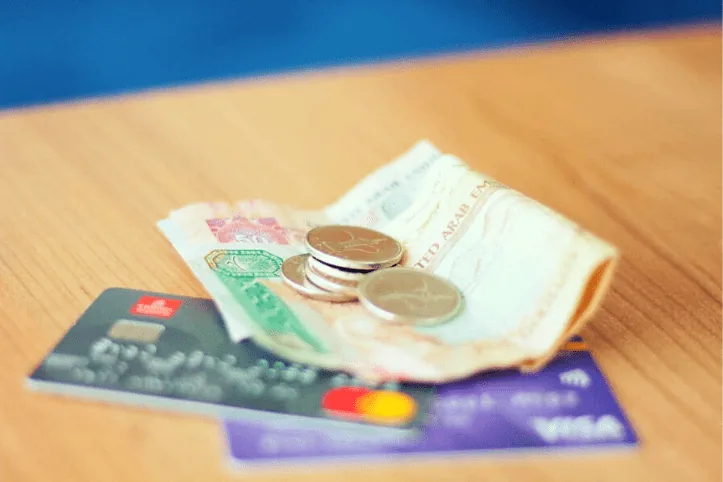
The point that matters most for the UAE market is the local dirham rail. OKX UAE lets users link any UAE bank account; according to the platform, AED deposits and withdrawals clear almost instantly, and the exchange charges zero fees on AED deposits and withdrawals. The usual stablecoin bridge becomes optional: the cycle "receive AED salary → buy tokenised Apple → sell → withdraw AED" happens inside one app. For companies, the setup makes it easier to bring an on-chain instrument into a routine workflow built around a UAE corporate bank account — a familiar operating account meets a tokenised asset without a forced detour into USDT.
What the company says
"The UAE has built one of the world’s most forward-looking environments for digital assets," said Rifad Mahasneh, CEO of OKX MENA & CIS, in the press release. Real-world assets, he added, are a big part of the next phase, and offering local AED funding alongside crypto in the same app is what the company captures in its "One App. Every Market." tagline.
Context: VARA and the UAE on the tokenisation map
The launch sits inside the Virtual Assets Regulatory Authority framework — Dubai’s dedicated regulator for virtual assets, which issues separate licences for crypto service providers. Platforms operating under VARA must meet rules on client-asset custody, risk disclosure and investor protection. For a business planning to run its own crypto service in Dubai, the baseline entry point is a VARA licence, with its own compliance regime and regulatory capital.
Tokenised stocks on OKX UAE are not a local experiment but a regional cut of a wider rollout: since the summer of 2026 OKX has offered a similar product across MENA, Southeast and Northeast Asia, the CIS and Türkiye, with settlement in USDT. What is specific to the UAE is the AED rail and the VARA licence, which legally separates the service from unregulated crypto venues.
What this means for the UAE market
For retail investors it shortens the path to US equities: no need to open an offshore brokerage, convert AED into USD and wait for the Nasdaq session to close. For businesses it opens a new class of on-chain instruments tied to familiar AED cash flow, which is of interest to corporate treasuries, family-office structures and fintech builders. For the regulator it adds another case where an international exchange launches in the UAE not plain crypto trading but a hybrid RWA product under a local licence.
One caveat matters: tokenised stocks are not a classic purchase of a security. The holder gets price exposure and the economic benefit of dividends, not direct ownership of the share in a US depositary and no voting rights. Any decisions on amounts and instruments remain with the investor; this article is informational and is not investment advice.