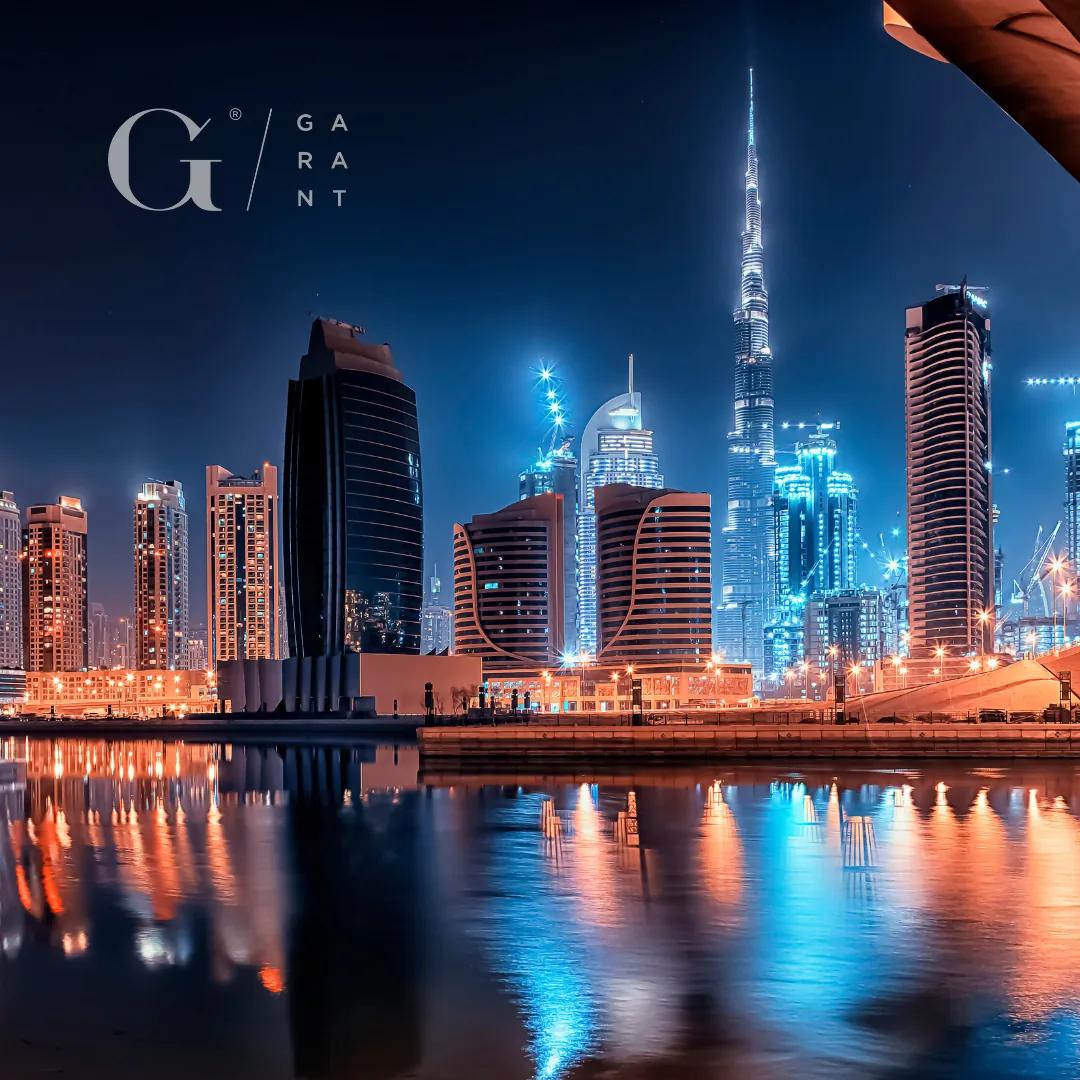

On 25 November DIFC released the final instalment of its 2026 Future of Finance series — a report titled «Beyond finance: The strategic business hubs of tomorrow». The core argument: competition between global business hubs has shifted from one or two advantages to integration across five pillars — and Dubai is benchmarked against Austin, Busan, Shenzhen, Bengaluru and Luxembourg on exactly that frame.
What DIFC published
The report is the fourth and final issue of DIFC Authority's 2026 Future of Finance series. The research base is a high-level roundtable and interviews with more than 20 global business leaders. Dateline: Dubai, 25 November 2026. The report is distributed through DIFC's publications hub — the English version via a document-pack request form, with the Arabic press release available as a separate PDF.
DIFC's press release headline — «Dubai sets global benchmark integrating five pillars of competitiveness, deepening access to businesses, capital and talent» — captures the main framing.
Five pillars of business hub competitiveness
DIFC sets out five «mutually reinforcing pillars» along which cities and financial centres now compete:
- Ease of business — licensing, visas, reporting, legal practice.
- Physical and digital infrastructure — in the report, combined into a single pillar.
- Financial depth — liquidity, access to capital, breadth of products.
- Human capital — inflow of skilled talent, including AI specialists.
- Reputation and governance — the jurisdiction's standing and quality of governance.
Austin, Busan, Shenzhen, Bengaluru, Luxembourg — and where Dubai is different
DIFC uses five benchmark cities, each embodying one of the five pillars, and contrasts them with Dubai's claim to integrate all five:
- Austin (USA) — ease of business.
- Busan (South Korea) — physical and digital infrastructure.
- Shenzhen (China) — financial depth.
- Bengaluru (India) — human capital.
- Luxembourg — reputation and governance.
The core thesis: one pillar is no longer enough — companies choosing a base increasingly look at the full package, not a single edge. Dubai is positioned as an «integrated» hub, tied to the Dubai Economic Agenda (D33) — the goal of doubling the emirate's economy and placing Dubai among the top four global financial centres.
The numbers DIFC uses to back the Dubai case
Several headline figures anchor the report:
- DIFC has crossed 10,000 active firms in 2026, up 30% year-on-year.
- Dubai issued more than 1 million new residence permits in the first half of 2026 alone.
- The UAE ranks 36th of 143 countries, and first regionally, in the World Justice Project Rule of Law Index.
- Enterprise AI adoption rose from 33% in 2024 to more than 50% in 2026.
- DIFC's Innovation Hub hosts over 2,000 AI, innovation and tech firms.
Separately, DIFC frames itself as an «AI-native financial centre»: embedding AI into supervisory systems, digital-first licensing and automated compliance. Named growth sectors are insurance, private markets, FinTech and digital assets.
H.E. Arif Amiri, CEO of DIFC Authority — direct quote
«Companies choosing a base for their operations are increasingly deciding on fundamentals: a trusted legal and regulatory framework, quality infrastructure, and access to capital and talent. That is what the Future of Finance report findings indicate, and it is consistent with what we hear from firms entering the market as well as the companies within our world-class ecosystem. Our focus is on giving those businesses the clarity, ecosystem depth and market access they need to establish and scale across the region from Dubai», as quoted in DIFC's release.
What this means for a company choosing a UAE jurisdiction
In practical terms, DIFC's framing gives the decision a shared language: not «where is it cheapest to open a company» but a package of five pillars — licensing and regulation, infrastructure, capital depth, talent, reputation. In the UAE this maps directly onto the choice between financial centres (DIFC, ADGM), classic free zones (DMCC, IFZA, Meydan and others) and mainland — and it pays to look both at a side-by-side of DMCC, IFZA, Meydan, DIFC and ADGM as free zones and at the macro context of the UAE economy in 2026. Dubai's backdrop — 10,000+ firms at DIFC, more than a million new residences in a single half-year, AI adoption rising past 50% — strengthens the emirate's case, but the business-specific pillar check still has to be done on its own.
All facts are from DIFC's press release of 25 November 2026 and the accompanying report «Beyond finance: The strategic business hubs of tomorrow».